
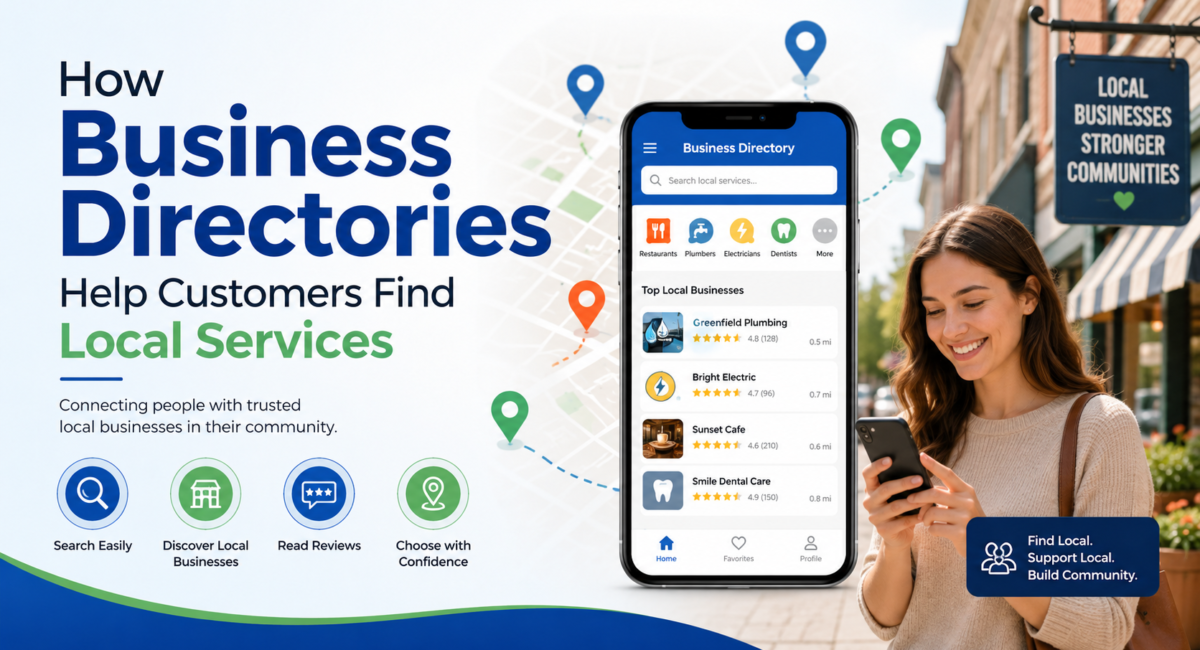
How Business Directories Help Customers Find Local Services
Nobody plans how they’ll find a local business. You need a plumber at 11pm, you search. Admissions closing next week, you search. Wedding three weeks out and still no caterer you search. Instagram and neighbor recommendations come later. Google comes first.
That’s the part most business owners don’t account for. They focus on their website, their social media, maybe some ads. And those things matter. But the moment a customer actually needs something, the first place they go is usually a directory not your homepage.
The Way Customers Actually Search Has Changed
It used to be simpler. Someone needed a service, asked around, got a name, made a call. That still happens, but now there’s a search step before any of that. And that search lands mostly on directories.
It’s not just typing into Google either. People open Justdial specifically for local vendors. They check Zomato before picking a restaurant. They look at Shiksha before calling an institute. Each of these platforms has its own search, its own audience, its own trust — and they all feed into how customers discover businesses before ever visiting a website.
Why Directories Work Better Than Just Having a Website
A website is necessary. But it doesn’t solve the discovery problem on its own.
Search “AC repair Kolkata” on Google and the first thing you see isn’t someone’s website. It’s a map with three or four businesses listed directly on the results page. Those businesses aren’t there because they have better designs or faster load times. They’re there because their profiles are complete, their information is consistent, and they have reviews. That’s it.
Getting into that map requires an active directory presence. A website sitting alone rarely gets you there.
And beyond Google, consider what happens on platforms with their own search. Someone browsing Zomato for a restaurant is not going to visit your website first. They’ll decide entirely within Zomato. If you’re not listed there, you don’t exist for that person regardless of how good your site is.
That’s the real limitation of relying only on a website. You’re only visible where people already know to look for you.
How the Discovery Process Actually Works
It helps to walk through what a customer does before they ever contact a business.
Step 1: They Search With Intent
Nobody opens Justdial to browse. They open it because they need something specific “electrician near me,” “packers and movers in Howrah,” “UI UX design course in Kolkata.” The intent is already there. A directory listing puts you in front of that intent at the exact right moment, without any ongoing ad spend.
Step 2: They Filter and Compare
Results appear, and the first filter is almost always ratings. A business with 80 reviews and a 4.2-star average gets clicks. One with zero reviews gets skipped even if the service is genuinely better. Customers compare multiple options in about 20 seconds, entirely on the directory page, not on anyone’s website.
Step 3: They Verify Before Contacting
Before calling, most people check a few basic things. Is the address real? Are the hours current? Does the phone number work? Are there reviews from recent months, not just old ones from three years back?
If your listing has wrong information or looks abandoned, people move on. It takes about 30 seconds to lose a potential customer this way — and you never know it happened.
Step 4: They Contact
Only after all of that does someone call, message, or walk in. By this point they’ve already decided they’re interested. The trust work happened on the directory page. The conversion is easier because half the decision was already made before they picked up the phone.
What Makes a Directory Listing Actually Useful to Customers
Not every listing helps. A bare entry with just a name and phone number doesn’t give customers what they need to choose you over someone else.
Accurate and Complete Information
Name, address, phone, hours, website, category all of it needs to be current. A customer who shows up at your location during hours that don’t match your listing won’t give you a second chance.
Real Photos
Listings with photos consistently get more engagement on every major platform. A few interior shots, a storefront photo, team pictures if relevant these make a listing feel like an active business rather than something someone created and forgot about.
Reviews and How You Handle Them
Reviews matter more than most business owners realize. Quantity matters. Recency matters. And how you respond especially to negative reviews tells potential customers something real about what working with you is like. A thoughtful response to a complaint often builds more trust than ten positive reviews sitting there unanswered.
A Description That Actually Says Something
Most directories give you space to describe what you do. Use it properly.
“4-month digital marketing course in Kolkata covering SEO, Google Ads, and Meta Ads” is useful to someone actively looking for a course. “We provide quality digital marketing training” tells them nothing. People searching for a specific service want specifics, not reassurances. Same logic applies to any business say what you do, where you do it, and who it’s for.
The Types of Directories That Matter
Not every directory works the same way, and trying to list everywhere at once isn’t practical.
General platforms like Google Business Profile and Justdial should come first. They reach the widest audience regardless of industry. Bing Places and Facebook Business are worth adding early on as well, particularly for businesses targeting customers in the 35-plus age range.
Niche directories do something different. Someone visiting Shiksha or Careers360 is already looking for a course the intent is sharper than on a general platform. Someone searching on IndiaMart wants a B2B supplier, not a restaurant. Clutch is where software agencies and marketing firms get evaluated. The platform has to match what your customer is actually searching for.
Then there are category-dominant platforms Zomato for restaurants, Practo for healthcare, Urban Company for home services. In these industries, people go directly to the platform before they ever touch Google. Not being listed there is a serious gap, more so than being absent from a general directory.
What Happens When You Are Not Listed
A potential customer searches for something you offer. Your competitors show up complete profiles, real photos, 60-plus reviews, active responses to feedback. You don’t appear at all, or you appear with an unclaimed listing that hasn’t been touched since the business launched.
The customer picks someone else. Not because your service is worse they never got far enough to find that out. The decision happened in the first 15 seconds of looking at results.
That’s what ignoring directories actually costs. Not in theory in real customers who were already looking for what you offer and went somewhere else.
A Practical Way to Get Started
Start with Google Business Profile. It affects local search rankings, map results, and voice search more than anything else. Get that right first complete information, verified address, real photos, correct business categories.
Then add two or three platforms relevant to your industry. For most businesses in India, Justdial and Sulekha are worth the effort. Education businesses should be on Shiksha and Careers360. B2B suppliers belong on IndiaMart.
After that, maintenance matters more than adding new platforms. The businesses that stay visible in directory results are almost always the ones that treat their listings as something ongoing updating hours when they change, responding to reviews, refreshing photos once in a while. It doesn’t take much time. It just has to actually happen.
Nobody finds a local business by accident. There’s a search, a comparison, a decision all of it happening on a directory page before anyone makes a call. If you’re not showing up in that process, you’re not in the running.
Leave a Comment