
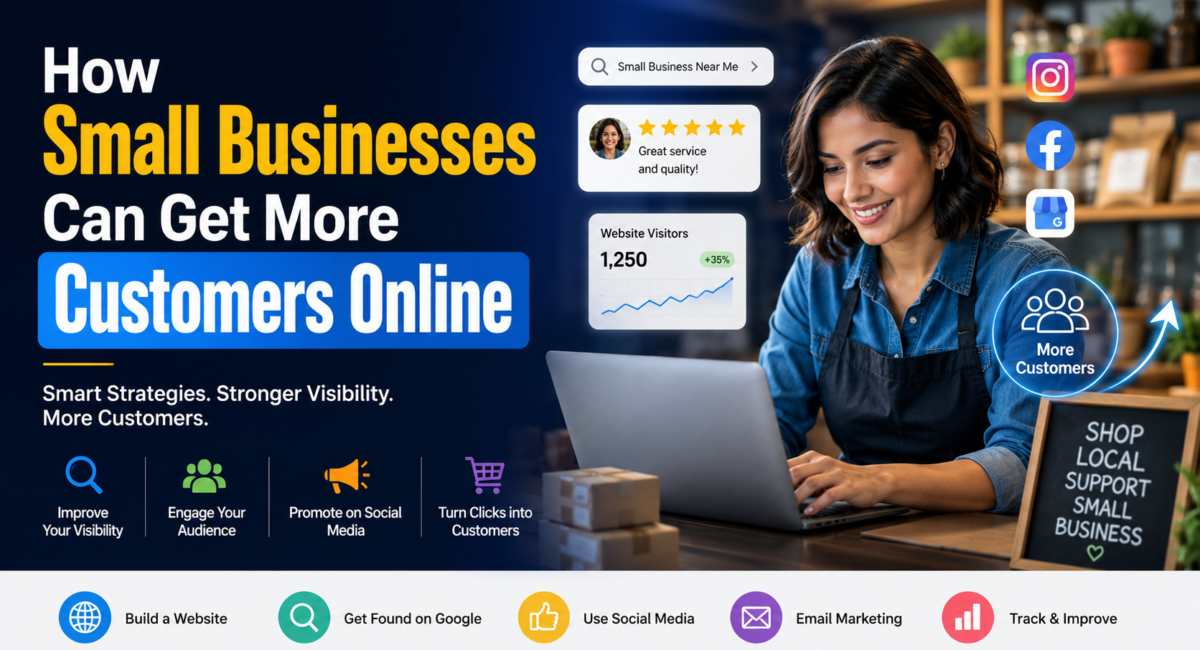
How Small Businesses Can Get More Customers Online (Complete Guide for 2026)
Running a small business today is very different from how it was just a few years ago. Earlier, most businesses depended on walk-in customers, newspaper advertisements, or word-of-mouth referrals. While these methods still have value, customer behavior has changed dramatically.
Today, when someone needs a product or service, the first thing they usually do is search online. Whether they are looking for a nearby restaurant, a clothing store, a repair service, or a digital agency, they expect to find reliable information within seconds.
This shift has created a huge opportunity for small businesses. You don’t need a massive marketing budget or a large team to compete. What you need is a smart online strategy that helps people discover your business, trust your brand, and eventually become paying customers.
In this guide, you’ll learn practical and proven ways to get more customers online without relying on expensive advertising alone.
Why Every Small Business Needs an Online Presence
Millions of people search online every single day before making a purchase. They compare prices, read reviews, visit websites, and check social media profiles before deciding where to spend their money.
If your business isn’t visible online, potential customers may never know you exist—even if your products or services are better than your competitors’.
A strong online presence helps you:
- Reach customers beyond your local neighborhood.
- Build trust through reviews and professional branding.
- Generate leads 24/7.
- Increase sales without opening additional locations.
- Stay competitive in your industry.
The good news is that most of these strategies are affordable and can be implemented gradually.
1. Build a Professional Website
Your website is your digital storefront.
When people discover your business, they usually visit your website before contacting you. A slow, outdated, or confusing website can make potential customers leave immediately.
Your website should include:
- Clear business information
- Products or services
- Pricing (if appropriate)
- Contact details
- Customer testimonials
- Frequently Asked Questions
- Easy navigation
- Mobile-friendly design
- Fast loading speed
Don’t try to impress visitors with flashy animations. Focus on making it easy for them to find information and contact you.
2. Optimize Your Website for Search Engines (SEO)
Search Engine Optimization (SEO) helps your website appear when people search for businesses like yours.
For example, if you own a bakery in Mumbai, you want your website to appear when someone searches:
- best bakery near me
- fresh cakes in Mumbai
- birthday cake delivery
SEO involves:
Keyword Research
Find keywords your customers actually search for.
Instead of guessing, use keyword research tools to identify search demand.
Example:
Instead of targeting:
“bakery”
Target:
- birthday cake shop
- custom wedding cakes
- cake delivery near me
Long-tail keywords usually convert better because they match specific customer intent.
Create Helpful Content
Publishing useful blog posts builds authority and attracts search traffic.
Examples include:
- Buying guides
- Tutorials
- FAQs
- Industry tips
- Product comparisons
Helpful content answers customer questions before they even contact you.
Improve Technical SEO
Technical improvements include:
- Fast website speed
- Secure HTTPS connection
- Mobile responsiveness
- Clean URLs
- Internal linking
- Optimized images
These improvements help both users and search engines.
3. Create and Optimize Your Google Business Profile
If you serve customers locally, a Google Business Profile is essential.
It helps your business appear in:
- Google Maps
- Local Search
- “Near Me” searches
Complete every section including:
- Business name
- Phone number
- Website
- Business hours
- Photos
- Services
- Categories
Keep your profile updated regularly.
4. Collect More Customer Reviews
Online reviews influence buying decisions.
People naturally trust businesses with genuine positive reviews.
Encourage satisfied customers to leave reviews after every successful purchase.
Respond to:
- Positive reviews
- Neutral reviews
- Negative reviews
Professional responses demonstrate excellent customer service.
Never purchase fake reviews—they often do more harm than good.
5. List Your Business in Online Directories
Business directories help customers discover your company while also strengthening your online visibility.
List your business on reputable directories relevant to your industry and location.
Your listings should always contain consistent information, including your business name, address, phone number, website, and business category.
For businesses looking to improve their online presence across India, platforms like ListyMart can help increase visibility by allowing potential customers to find businesses through organized business listings. Consistent directory listings also support local SEO efforts when combined with accurate business information.
Choose quality directories rather than submitting your business to hundreds of low-quality websites.
6. Use Social Media to Build Relationships
Social media isn’t just about selling.
It’s about staying visible.
Share:
- Behind-the-scenes content
- Customer success stories
- Educational tips
- New products
- Special offers
- Videos
- Team photos
Businesses that interact with followers consistently build stronger trust over time.
Remember:
People buy from businesses they recognize.
7. Publish Valuable Blog Content
Blogging remains one of the most effective long-term marketing strategies.
Each article becomes another opportunity for customers to discover your business through search engines.
Good blog ideas include:
- Common customer questions
- Industry trends
- Product guides
- Case studies
- Seasonal tips
Helpful blogs continue attracting visitors for months or even years.
8. Use Email Marketing
Many visitors won’t buy on their first visit.
Email allows you to stay connected.
Send:
- Helpful tips
- Product updates
- Discounts
- New arrivals
- Educational newsletters
Focus on providing value rather than constantly promoting your products.
Consistency matters more than frequency.
9. Invest in High-Quality Photos and Videos
Visual content captures attention much faster than plain text.
Use professional images whenever possible.
Show:
- Products
- Team members
- Store interior
- Customer experiences
- Before-and-after transformations
Short videos often receive higher engagement on social media than static images.
10. Run Targeted Paid Advertising
Organic marketing takes time.
Paid advertising can generate immediate traffic.
Popular platforms include:
- Google Ads
- Facebook Ads
- Instagram Ads
Start with a small budget.
Monitor:
- Click-through rate
- Cost per lead
- Conversion rate
- Return on investment
Avoid spending money without tracking results.
11. Build Trust Before Selling
Customers rarely buy from businesses they don’t trust.
Trust signals include:
- Customer reviews
- Testimonials
- Certifications
- Secure payment options
- Professional branding
- Clear contact information
- Privacy policy
- Refund policy
The easier you make customers feel confident, the more likely they are to purchase.
12. Track Your Marketing Performance
Successful businesses don’t rely on guesswork.
Monitor important metrics such as:
- Website visitors
- Search rankings
- Leads generated
- Sales conversions
- Email open rates
- Social engagement
- Customer acquisition cost
Regular analysis helps you improve your strategy over time.
Common Mistakes Small Businesses Should Avoid
Many businesses struggle online because they make avoidable mistakes.
Some of the most common include:
- Ignoring SEO
- Having an outdated website
- Inconsistent business information
- Not responding to customer reviews
- Posting randomly on social media
- Publishing low-quality content
- Targeting too many keywords at once
- Expecting instant results
Digital marketing rewards consistency rather than shortcuts.
Frequently Asked Questions
How long does it take to get more customers online?
SEO usually takes several months to show significant results, while paid advertising can generate traffic almost immediately. Building long-term customer trust requires consistent effort.
Is SEO better than paid advertising?
Both have advantages. SEO creates sustainable, long-term traffic, while paid ads deliver quicker visibility. Combining both often provides the best results.
Do small businesses really need a website?
Yes. A professional website builds credibility, gives customers reliable information, and serves as the foundation of your online marketing efforts.
Are business directories still useful?
Yes. Reputable business directories can improve online visibility, help customers discover your business, and support local SEO when your business information is accurate and consistent.
Final Thoughts
Getting more customers online isn’t about chasing every new marketing trend. It’s about making it easy for people to find your business, trust your brand, and take the next step.
Start by building a strong website, improving your SEO, optimizing your Google Business Profile, publishing helpful content, collecting genuine customer reviews, and maintaining consistent listings across trusted business directories. Combine these efforts with active social media engagement and regular performance tracking, and you’ll create a marketing system that continues to grow over time.
The businesses that succeed online are rarely the ones with the biggest budgets—they’re the ones that consistently provide value and remain visible where customers are already searching. Focus on solving your audience’s problems, keep improving your online presence, and your customer base will grow steadily.
Leave a Comment