
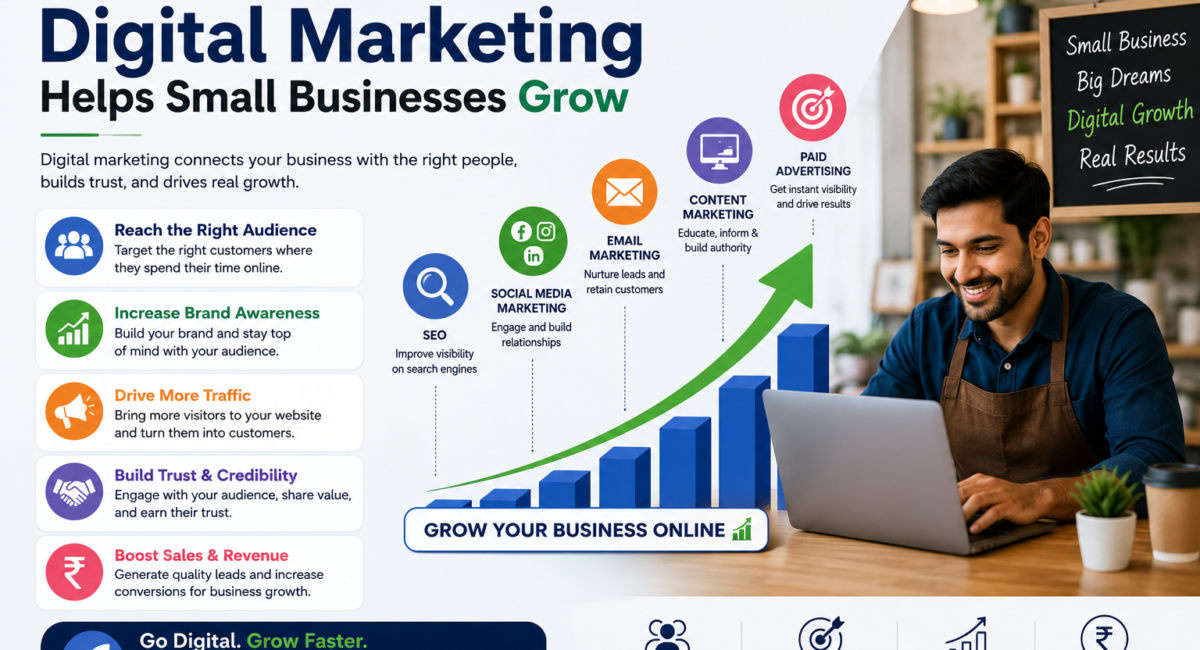
How Digital Marketing Helps Small Businesses Grow: A Complete Guide
Introduction
Growing a small business has never been easy, but today’s digital world offers opportunities that were difficult to imagine just a few years ago. Whether you own a local store, a service-based company, or an online business, your potential customers are searching for products and services on the internet every day.
Simply having a good product or service is no longer enough. Customers often compare businesses online, read reviews, visit websites, and check social media before making a decision. Businesses that build a strong digital presence are more likely to attract attention, earn trust, and generate consistent leads.
Digital marketing allows small businesses to compete with larger brands without requiring massive advertising budgets. With the right strategy, even a newly launched business can reach its target audience, build lasting customer relationships, and grow steadily.
This guide explains how digital marketing supports small business growth, the key strategies involved, and practical ways to get started.
What Is Digital Marketing?
Digital marketing is the process of promoting products or services through online channels such as:
- Search engines
- Business websites
- Social media platforms
- Email marketing
- Online directories
- Content marketing
- Paid advertising
Unlike traditional marketing, digital marketing enables businesses to reach the right audience, measure campaign performance, and adjust strategies based on real data.
Why Digital Marketing Matters for Small Businesses
Consumers now rely heavily on the internet to research businesses before making purchases. A strong online presence helps small businesses become more visible, credible, and accessible.
Digital marketing helps businesses:
- Reach more potential customers
- Build brand awareness
- Generate qualified leads
- Increase website traffic
- Improve customer engagement
- Grow sales over time
Instead of competing only within a local neighborhood, businesses can expand their reach to customers across cities or even nationwide.
1. Increases Online Visibility
One of the biggest challenges for small businesses is getting noticed.
Digital marketing improves visibility by helping businesses appear where customers are already searching.
This includes:
- Search engine results
- Google Business Profile
- Online business directories
- Social media platforms
- Industry-specific websites
The easier it is for customers to find your business, the more opportunities you have to generate inquiries and sales.
2. Helps Reach the Right Audience
Unlike traditional advertising, digital marketing allows businesses to target specific audiences based on:
- Location
- Age
- Interests
- Search behavior
- Purchasing intent
This targeted approach helps businesses use their marketing budget more efficiently by reaching people who are more likely to become customers.
3. Builds Brand Trust and Credibility
Customers are more likely to choose businesses they recognize and trust.
Digital marketing builds credibility through:
- Informative website content
- Positive customer reviews
- Active social media profiles
- Educational blog articles
- Professional branding
Providing valuable information consistently positions your business as a reliable source within your industry.
4. Supports Local Business Growth
For businesses serving a specific area, local digital marketing is especially valuable.
Optimizing your online presence with accurate business information, customer reviews, and location-based content helps attract nearby customers searching for relevant services.
Appearing in local search results increases the chances of receiving phone calls, website visits, and walk-in customers.
5. Generates High-Quality Leads
Not every visitor becomes a customer immediately.
Digital marketing helps attract people who are actively looking for products or services similar to yours.
Examples include:
- Someone searching for a nearby electrician
- A customer comparing accounting services
- A business owner looking for marketing support
These visitors often have a higher likelihood of converting because they already have purchasing intent.
6. Improves Customer Engagement
Digital marketing creates opportunities to communicate directly with customers.
Businesses can interact through:
- Social media comments
- Email newsletters
- Contact forms
- Live chat
- Blog content
Regular engagement strengthens relationships and encourages repeat business.
7. Cost-Effective Compared to Traditional Advertising
Small businesses often have limited marketing budgets.
Digital marketing provides flexible options that allow businesses to start small and scale over time.
Examples include:
- Publishing blog articles
- Optimizing website content
- Building an email list
- Managing social media profiles
- Running targeted advertising campaigns
Many digital marketing activities continue generating value long after the initial effort.
8. Helps Build Long-Term Organic Traffic
Search engine optimization (SEO) focuses on improving website visibility in search results.
Creating useful content around customer questions can attract visitors consistently without relying solely on paid advertising.
Over time, quality content becomes a valuable business asset that continues bringing traffic and leads.
9. Provides Measurable Results
One major advantage of digital marketing is the ability to track performance.
Businesses can measure:
- Website traffic
- Lead generation
- Conversion rates
- Customer engagement
- Search rankings
- Campaign performance
This data helps improve future marketing decisions.
10. Encourages Customer Loyalty
Digital marketing is not only about attracting new customers.
It also helps businesses stay connected with existing customers through:
- Email updates
- Educational content
- Special offers
- Customer support
- Social media interaction
Satisfied customers often become repeat buyers and recommend businesses to others.
Key Digital Marketing Strategies for Small Businesses
A balanced strategy often includes:
Search Engine Optimization (SEO)
Improve website visibility by creating helpful, keyword-focused content and optimizing technical performance.
Content Marketing
Publish blog posts, guides, FAQs, and educational resources that answer customer questions.
Social Media Marketing
Build awareness, engage with your audience, and share valuable updates across relevant platforms.
Email Marketing
Maintain communication with customers by sharing news, offers, and useful information.
Local Business Listings
Ensure your business information is accurate across online directories and local listing platforms.
Paid Advertising
Use targeted advertising campaigns to reach customers searching for products or services similar to yours.
Common Digital Marketing Mistakes Small Businesses Should Avoid
Many businesses struggle because they:
- Ignore SEO
- Publish inconsistent content
- Focus only on sales
- Neglect customer reviews
- Have slow websites
- Forget mobile optimization
- Fail to track performance
- Stop marketing after short-term results
Consistency is one of the most important factors in long-term success.
Tips to Build a Successful Digital Marketing Strategy
To maximize results:
- Understand your target audience
- Create valuable, original content
- Keep your website updated
- Focus on customer experience
- Collect genuine customer reviews
- Optimize for mobile devices
- Monitor website analytics
- Continue improving based on data
Digital marketing works best when businesses consistently provide value rather than focusing only on promotion.
Final Thoughts
Digital marketing has become an essential growth tool for small businesses in today’s competitive marketplace. It helps businesses increase visibility, attract qualified customers, build trust, and create lasting relationships without requiring enormous advertising budgets.
Success doesn’t happen overnight. Businesses that focus on understanding their audience, creating helpful content, maintaining a professional online presence, and continuously improving their marketing efforts are better positioned for long-term growth. By combining SEO, content marketing, local optimization, and customer engagement, small businesses can compete effectively and build a sustainable online presence that supports future success.
Frequently Asked Questions (FAQs)
How does digital marketing help small businesses?
Digital marketing helps small businesses increase visibility, attract targeted customers, improve brand awareness, and generate more leads through online channels.
Is digital marketing affordable for small businesses?
Yes. Many digital marketing strategies, such as SEO, content marketing, and social media marketing, can be implemented with modest budgets and scaled over time.
Which digital marketing strategy works best for small businesses?
The most effective approach usually combines SEO, content marketing, local optimization, social media engagement, and customer reviews based on business goals and audience.
How long does digital marketing take to show results?
Some activities, such as paid advertising, can produce quick results, while SEO and content marketing typically require several months of consistent effort.
Can digital marketing replace traditional marketing?
Digital marketing complements traditional marketing and often provides better targeting, measurable performance, and greater flexibility for small businesses.
Leave a Comment