
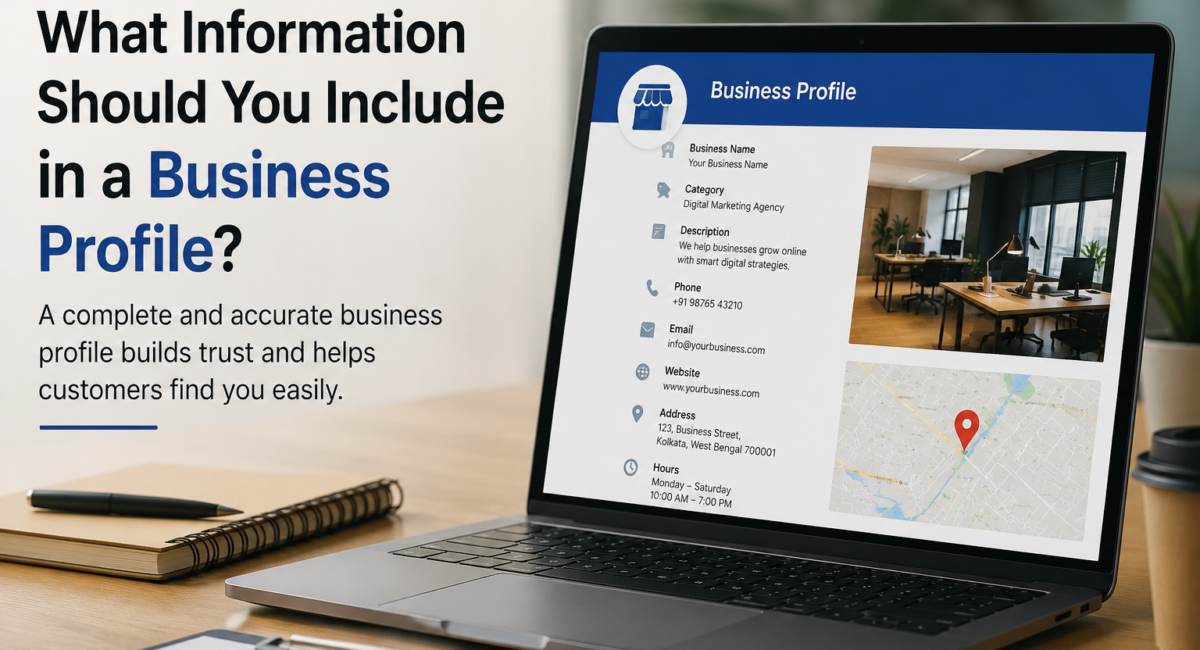
What Information Should You Include in a Business Profile? A Complete Guide
Introduction
A business profile is often the first impression potential customers have of your company. Whether someone finds your business through a search engine, an online directory, a business listing website, or social media, they expect to see accurate and helpful information before deciding to contact you.
Unfortunately, many businesses create a profile with only basic details such as their name and phone number. While this may provide a starting point, it rarely gives customers enough information to build confidence or understand what the business offers.
A complete business profile does more than introduce your company. It helps customers learn about your products or services, discover your location, verify your contact details, view customer reviews, and decide whether your business meets their needs. It also supports search engine optimization (SEO) by providing consistent and reliable business information across the web.
In this guide, you’ll learn what information every business profile should include and how to create a profile that builds trust and attracts more customers.
What Is a Business Profile?
A business profile is an online page that provides essential information about a company. It may appear on:
- Business directory websites
- Search engines
- Map services
- Industry-specific directories
- Social media platforms
- Company websites
Its primary purpose is to help customers quickly understand who you are, what you offer, and how they can contact you.
Why a Complete Business Profile Matters
An optimized business profile offers several benefits:
- Builds customer trust
- Improves online visibility
- Supports local SEO
- Makes it easier for customers to contact you
- Increases website visits
- Generates more inquiries
- Creates a professional first impression
Customers are more likely to choose businesses that provide complete and accurate information.
1. Business Name
Your business name should always match your official branding.
Use the same name across:
- Website
- Business directories
- Social media profiles
- Maps
- Online listings
Consistency helps customers recognize your business and improves search engine trust.
2. Business Logo
A professional logo strengthens your brand identity.
Your logo should be:
- High quality
- Easy to recognize
- Consistent across all platforms
- Properly sized
A recognizable logo helps customers remember your business.
3. Business Description
Your description should explain:
- What your business does
- Products or services offered
- Industries served
- What makes your business different
- Your experience or expertise
Focus on helping customers understand your business rather than using promotional language.
Example:
“ABC Home Services provides residential plumbing, electrical repairs, and maintenance solutions with experienced technicians and reliable customer support.”
4. Business Category
Choose the category that best represents your business.
Examples include:
- Restaurant
- Retail Store
- Marketing Agency
- Medical Clinic
- Real Estate Agency
- Education Institute
- Beauty Salon
Selecting the correct category helps customers find your business more easily.
5. Contact Information
Customers should be able to contact you without difficulty.
Include:
- Phone number
- Email address
- Website
- Contact form (if available)
Verify that all contact information is accurate and updated.
6. Business Address
If you serve customers from a physical location, include your complete address.
This helps customers:
- Find your business
- Visit your location
- Verify your legitimacy
Service-based businesses can also specify the areas they serve.
7. Business Hours
Always display your operating hours clearly.
Include:
- Opening time
- Closing time
- Weekend hours
- Holiday schedules (when applicable)
Keeping hours updated improves customer satisfaction.
8. Website Link
Your website provides customers with additional information about:
- Services
- Pricing
- Company information
- Blog articles
- FAQs
- Customer testimonials
Adding your website also strengthens your online presence.
9. Products and Services
Clearly describe the products or services your business offers.
Rather than simply listing categories, explain how they help customers.
Example:
Instead of:
- Web Design
- SEO
- Marketing
Write:
- Custom website design for businesses
- Search engine optimization to improve online visibility
- Digital marketing strategies for business growth
Detailed descriptions make your profile more informative.
10. High-Quality Photos
Photos help customers understand your business before contacting you.
Consider uploading:
- Business exterior
- Office interior
- Products
- Team members
- Completed projects
- Work environment
Professional images create a stronger first impression.
11. Customer Reviews
Reviews are one of the most valuable parts of a business profile.
Positive customer feedback helps:
- Build trust
- Increase credibility
- Influence purchasing decisions
- Improve local SEO
Encourage satisfied customers to leave genuine reviews after completing a purchase or service.
12. Social Media Links
If your business is active on social media, include links to your official profiles.
These platforms allow customers to:
- Learn more about your business
- View recent updates
- See customer engagement
- Contact you directly
Ensure the profiles are active and regularly maintained.
13. Business Highlights
Mention key features that make your business stand out.
Examples:
- Experienced team
- Certified professionals
- Same-day service
- Online appointments
- Free consultation
- Nationwide delivery
- Customer support
Only include information that accurately reflects your business.
14. Payment Methods
Customers appreciate knowing which payment options you accept.
Examples include:
- Cash
- Credit cards
- Debit cards
- UPI
- Net banking
- Digital wallets
Providing this information reduces uncertainty before purchase.
15. Service Areas
If your business serves multiple locations, mention them clearly.
Examples:
- Kolkata
- Mumbai
- Delhi
- Bengaluru
- Chennai
Service areas help customers understand whether your business is available in their region.
Common Mistakes to Avoid
Many businesses reduce the effectiveness of their profiles by making simple mistakes.
Avoid:
- Missing contact information
- Outdated phone numbers
- Poor-quality images
- Keyword stuffing
- Inconsistent business details
- Incomplete service descriptions
- Ignoring customer reviews
- Forgetting to update business hours
Regular maintenance keeps your profile accurate and useful.
Tips for Creating a Strong Business Profile
Follow these best practices:
- Complete every available section.
- Keep information accurate.
- Use simple, customer-friendly language.
- Upload professional images.
- Update details regularly.
- Encourage genuine customer reviews.
- Respond to customer feedback.
- Maintain consistent branding.
Small improvements can significantly increase customer confidence.
How a Complete Business Profile Helps SEO
Business profiles support search engine optimization by providing consistent business information across trusted platforms.
Benefits include:
- Better local search visibility
- Improved online credibility
- Higher customer engagement
- Increased website traffic
- More inquiries and leads
When combined with a quality website and helpful content, a complete business profile strengthens your digital presence.
Final Thoughts
A business profile is much more than a simple directory listing. It is an opportunity to introduce your business, answer customer questions, and build trust before the first conversation takes place. Customers are more likely to choose businesses that provide accurate information, clear service descriptions, high-quality photos, and genuine customer reviews.
Keeping your profile complete, consistent, and up to date not only improves the customer experience but also supports your online visibility and long-term business growth. By investing a little time in maintaining your business profile, you create a stronger foundation for attracting new customers and building a credible online presence.
Frequently Asked Questions (FAQs)
What is a business profile?
A business profile is an online page that provides important information about a business, including its contact details, services, business hours, website, and customer reviews.
Why is a business profile important?
A complete business profile builds trust, improves online visibility, supports local SEO, and helps customers understand your business before contacting you.
What should be included in a business profile?
A business profile should include your business name, logo, description, contact information, address, website, business hours, products or services, photos, customer reviews, and social media links.
How often should I update my business profile?
Review your profile regularly and update it whenever your contact information, business hours, services, or other important details change.
Do business profiles help SEO?
Yes. Consistent and accurate business profiles improve local SEO by helping search engines verify your business information and making it easier for customers to find you.
Leave a Comment