
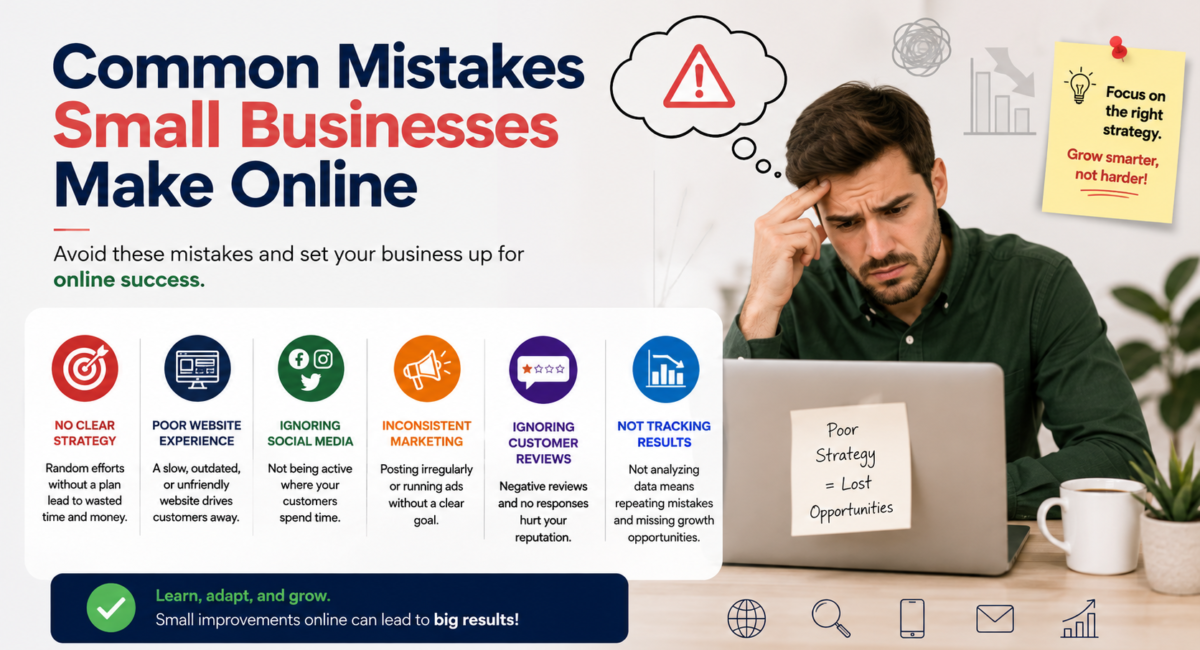
Common Mistakes Small Businesses Make Online: A Complete Guide to Avoiding Costly Errors
Introduction
Starting a small business today is easier than ever, but building a successful online presence is a different challenge. Many business owners invest time and money into creating a website or social media pages, expecting customers to arrive automatically. In reality, success online requires consistent effort, thoughtful planning, and a focus on customer experience.
Small mistakes—such as having an outdated website, ignoring customer reviews, or publishing low-quality content—can reduce visibility, lower customer trust, and result in missed business opportunities. The good news is that most of these issues are easy to identify and fix.
In this guide, we’ll explore the most common online mistakes small businesses make, why they matter, and practical steps you can take to avoid them.
Why Your Online Presence Matters
Today, most customers begin their buying journey online. They search for products, compare businesses, read reviews, and visit websites before making a decision.
A strong online presence helps businesses:
- Build trust with potential customers
- Increase visibility in search engines
- Generate quality leads
- Improve customer engagement
- Create long-term brand recognition
Ignoring your online presence means losing opportunities to competitors who make it easier for customers to find and trust them.
1. Not Having a Professional Website
Many small businesses rely only on social media. While platforms like Facebook or Instagram are valuable, they should not replace a business website.
A professional website gives customers a central place to learn about your business, explore services, and contact you.
Your website should include:
- Clear business information
- Contact details
- Service pages
- Customer testimonials
- Fast loading speed
- Mobile-friendly design
2. Ignoring Search Engine Optimization (SEO)
Even the best website won’t attract visitors if people can’t find it.
Common SEO mistakes include:
- Missing page titles and meta descriptions
- Poor keyword research
- Duplicate content
- Broken links
- Slow website speed
- No internal linking
Investing in basic SEO helps search engines understand your website and improves your chances of appearing in relevant search results.
3. Publishing Low-Quality or Inconsistent Content
Content is one of the most effective ways to attract potential customers.
However, many businesses:
- Publish irregularly
- Copy content from competitors
- Write only promotional articles
- Ignore customer questions
Instead, create helpful content that answers real customer problems and demonstrates your expertise.
Examples include:
- How-to guides
- Industry tips
- FAQs
- Product comparisons
- Case studies
4. Forgetting Mobile Users
A large percentage of website traffic comes from smartphones.
If your website is difficult to use on mobile devices, visitors may leave before taking any action.
Make sure your website:
- Loads quickly
- Uses readable fonts
- Has easy navigation
- Includes clickable buttons
- Displays correctly on all screen sizes
5. Slow Website Speed
Website speed directly affects user experience.
Slow websites often experience:
- Higher bounce rates
- Lower conversions
- Reduced search rankings
Improve speed by:
- Compressing images
- Removing unnecessary plugins
- Using browser caching
- Choosing reliable hosting
- Optimizing code
6. Ignoring Customer Reviews
Customer reviews influence purchasing decisions.
Some businesses never respond to reviews, while others avoid asking customers for feedback altogether.
Best practices include:
- Encourage satisfied customers to leave honest reviews
- Respond politely to positive and negative feedback
- Learn from customer suggestions
- Monitor your online reputation regularly
7. Weak Contact Information
Customers should never struggle to contact your business.
Every website should clearly display:
- Phone number
- Email address
- Business location
- Contact form
- Business hours
Easy communication increases customer confidence.
8. Inconsistent Business Information
Your business name, address, and phone number should remain consistent across:
- Website
- Google Business Profile
- Social media
- Online directories
- Local business listings
Inconsistent information can confuse customers and negatively affect local SEO.
9. Neglecting Website Security
Customers expect websites to protect their personal information.
Important security measures include:
- HTTPS (SSL certificate)
- Strong passwords
- Regular software updates
- Website backups
- Secure contact forms
A secure website protects both your business and your customers.
10. Ignoring Analytics
Many businesses never check how visitors use their websites.
Analytics help answer questions such as:
- Which pages receive the most traffic?
- Where do visitors come from?
- Which content performs best?
- Where do users leave the website?
Using this data helps businesses make smarter marketing decisions.
11. Having No Clear Call to Action (CTA)
Visitors should know exactly what to do next.
Examples of effective CTAs include:
- Contact Us
- Request a Quote
- Book a Consultation
- Download Our Guide
- Shop Now
Every important page should guide visitors toward a clear action.
12. Posting Only Sales Content
Constantly promoting products can discourage potential customers.
Instead, balance promotional content with educational and helpful information.
Aim to:
- Solve customer problems
- Share useful tips
- Answer common questions
- Demonstrate industry expertise
Helpful content builds trust before asking customers to make a purchase.
13. Not Updating the Website
An outdated website may create the impression that a business is inactive.
Regularly update:
- Service information
- Pricing (if applicable)
- Blog posts
- Team details
- Customer testimonials
Fresh content also signals activity to search engines.
14. Ignoring Local SEO
For businesses serving specific cities or regions, local SEO is essential.
Improve local visibility by:
- Optimizing your Google Business Profile
- Collecting customer reviews
- Adding location-specific pages
- Using consistent business information
- Listing your business in reputable directories
15. Trying to Do Everything at Once
Many small businesses attempt SEO, social media, email marketing, paid ads, and content marketing simultaneously without a clear strategy.
Instead:
- Set realistic goals
- Prioritize high-impact activities
- Measure results
- Improve gradually
Consistency often delivers better results than trying every marketing tactic at once.
Best Practices for Small Businesses
To build a stronger online presence:
- Create a fast, user-friendly website
- Publish helpful, original content
- Focus on customer experience
- Optimize for search engines
- Keep business information accurate
- Monitor website performance
- Encourage genuine customer reviews
- Respond professionally to feedback
- Maintain regular website updates
- Continue learning and improving
Final Thoughts
Building a successful online presence doesn’t require a huge marketing budget, but it does require attention to detail and a commitment to continuous improvement. Many of the mistakes small businesses make online—such as neglecting SEO, ignoring customer reviews, or allowing a website to become outdated—are preventable and can be corrected with consistent effort.
By focusing on your customers’ needs, creating helpful content, maintaining a reliable website, and monitoring your online performance, you can strengthen your brand, improve search visibility, and create lasting relationships with your audience. Small improvements made consistently often lead to meaningful long-term growth.
Frequently Asked Questions (FAQs)
What is the biggest online mistake small businesses make?
One of the biggest mistakes is not having a well-optimized, mobile-friendly website supported by a consistent SEO strategy.
Why is SEO important for small businesses?
SEO helps potential customers discover your business through search engines, increasing visibility and attracting relevant traffic.
How often should a business update its website?
Review your website regularly and update content whenever business information changes. Publishing fresh content consistently can also support SEO.
Why should businesses respond to online reviews?
Responding to reviews demonstrates professionalism, builds customer trust, and shows that you value feedback.
Can small businesses succeed without a large marketing budget?
Yes. By focusing on customer experience, quality content, local SEO, and consistent online improvements, small businesses can compete effectively and achieve sustainable growth.
Leave a Comment